An acrylic waterproofing compound is most useful where a prepared concrete, masonry, plaster, or roof surface must resist rain and atmospheric moisture while remaining exposed for inspection and maintenance. By separating above-grade uses from water-pressured conditions, checking the substrate, and matching the coating to movement and traffic, you can decide where it belongs in a durable waterproofing system.
Key takeaways
- Use acrylic compounds on above-grade surfaces exposed to rain and intermittent wetting.
- Reject acrylic coatings where constant immersion or strong hydrostatic pressure dominates.
- Remove dust, oil, laitance, and loose material before applying the first coat.
- Reinforce joints and corners, then confirm drying temperatures and technical data.
Match the compound to the surface and its exposure
Use an acrylic-based compound first on above-grade, rain-facing surfaces: external walls, façades, parapets, balconies, terraces and roof slabs made from concrete, cement plaster, stucco, brickwork or masonry. It suits residential and commercial exteriors exposed to wind-driven rain or intermittent wetting.
| Surface | Exposure | Decision |
|---|---|---|
| External walls, façades and sunshades | Rain, sun and light weathering | Suitable when the substrate and product data agree |
| Parapets, terraces and roof slabs | Rain, UV and possible ponding | Use only within the stated roof limits; correct drainage faults |
| Balconies and decks | Foot traffic, furniture or wheeled loads | Use a traffic-rated system with a wear coat and aggregate |
| Bathrooms, planter boxes and sunken slabs | Damp or buried conditions | Use only when the data sheet gives damp-area, immersion or buried-service approval |
Above-grade positive-side application puts the coating on the face receiving rain. The film can shed water there and remain accessible for inspection, unlike a coating hidden behind soil or a wall finish.
Do not treat a decorative or lightly exposed coating as a traffic membrane. ASTM D6083/D6083M covers liquid-applied acrylic roof coatings, not every acrylic waterproofing compound. Pure acrylic, styrene-acrylic, acrylic-modified cementitious and acrylic emulsion products have different limits for UV, immersion, movement, pressure and abrasion. Select by the stated service, not by “acrylic” on the label.
Decide whether water pressure, immersion, or movement rules it in or out
Rain-facing above-grade surfaces are the strongest candidates for an acrylic film. Positive-side waterproofing keeps the coating on the face receiving water, while a basement wall faces hydrostatic pressure from the soil side and presents a higher-risk below-grade application.
1. Use it for exposed concrete, masonry, stucco, parapets, terraces, and roof areas when the product is approved for that substrate and exposure. Correct ponding and drainage faults before roof coating; a film cannot compensate for standing water.
2. Treat negative-side waterproofing as a specialist decision. Interior coating can trap water behind the film, allowing vapor or hydrostatic pressure to blister or delaminate it. Approve it only when the technical data identifies negative-side service and reports hydrostatic-pressure results.
3. Demand a product-specific immersion rating before using the compound in tanks, pools, fountains, permanently wet bathrooms, or continuously damp planter boxes. ASTM D6083/D6083M roof-coating classification does not prove immersion resistance.
4. Read ASTM C1305 crack-bridging results alongside the tested crack width, temperature, movement rate, substrate condition, and cycle count. A passing result does not qualify active structural cracks or moving joints automatically. Decks and balconies receiving regular loads need a traffic-rated system, wear coat, and aggregate.
For continuously wet or pressure-loaded construction, select the complete membrane, drainage, protection, and joint-detail system rather than relying on an exposed acrylic layer alone. Confirm every limit in the product data before proceeding.
Prepare concrete and masonry before the first coat
Adhesion starts with a sound concrete, cement plaster, brickwork, or masonry surface, not with the acrylic compound. Remove laitance, dust, oil, curing compounds, efflorescence, algae, salts, loose paint, and friable material before coating; contamination can cause blistering or delamination even when the formulation is suitable.
1. Pressure-wash or mechanically clean the substrate, then remove standing water and debris. Let it reach the product’s stated dry or damp condition, and measure substrate moisture when the data sheet sets a limit. Do not guess from surface appearance.
2. Complete honeycomb repair, void filling, spalled-edge repair, and recessed tie-hole repair with a compatible repair mortar. Allow repairs to cure as specified, then bring them flush with the surrounding surface.
3. Perform crack treatment before field coating. Open non-moving cracks into a clean V or U groove and seal them with the specified repair material. Route active or structural cracks to an engineer, then detail them with a compatible sealant or joint system rather than burying them under acrylic.
4. Form a mortar cove or cant at wall-floor junctions where the system requires one. Clean and seal pipe penetrations, drains, corners, and changes of plane; extra field coats will not replace these details.
5. Treat old waterproofing layers, paints, tiles, stone, and salt-contaminated damp substrates as unverified. Proceed only after adhesion and compatibility checks succeed. Where measured adhesion is specified, use a representative pull-off test under ASTM D7234 and apply the project’s acceptance value.
Build the coating system around joints, corners, and weather limits
Apply the compound as a system, not as a thicker layer over weak details. Follow the product data sheet for primer requirements, approved application tool, coat count, wet-film or dry-film thickness, coat thickness and coverage rate, recoat interval, and final curing time; never infer these figures from the word acrylic.
1. Use a roller, brush, or airless spray only when the data sheet lists that tool. Apply primer to porous, chalky, or difficult substrates when specified; skipping it can cause patchy absorption and early debonding.
2. Embed fiberglass fabric or reinforcing mesh into the wet coating at cracks, wall-floor coves, corners, construction joints, control joints, parapet edges, penetrations, and other movement-prone details when the system calls for reinforcement. Keep the fabric wrinkle-free and fully wetted.
3. Check air temperature, surface temperature, relative humidity, wind, dew point, condensation risk, and forecast rain against the stated application window. Rain or condensation before cure can break film continuity, while freezing can damage a water-based acrylic during early cure.
4. Protect water-based acrylics from rain, high humidity, and freezing until the specified cure period ends. Before backfilling or covering a buried system, install the protective screed or board required by the system.
Extra coats do not replace a joint sealant, waterstop, termination, or drain detail. They also cannot correct ponding, movement, or a failed substrate preparation.
Verify the technical data before choosing a product for the project
Selection is complete only when the product documents match the site, exposure, and maintenance plan.
Request the current technical data sheet, safety data sheet, batch number, substrate compatibility statement, application-temperature range, moisture limit, coat thickness, coverage, recoat interval, cure time, crack-bridging test conditions, hydrostatic-pressure rating or immersion rating, UV and ponding-water limits, traffic classification, and approved primer, sealant, mesh, and protective-screed details.
| Substrate | Accept only when the documents list it |
|---|---|
| Concrete or cement plaster | Confirm moisture, alkalinity, primer, and repair limits |
| Brick, stone, or masonry | Confirm porosity, salt treatment, and adhesion requirements |
| Tiles, old coating, or painted surface | Require compatibility approval and a successful adhesion trial |
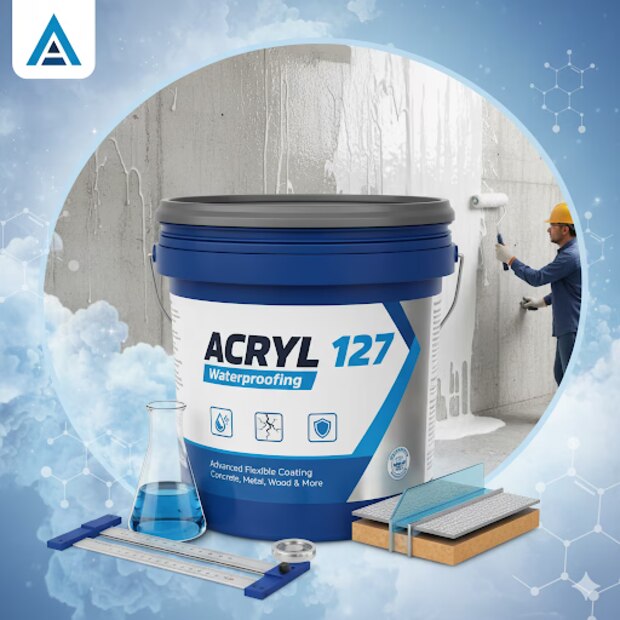
Ask Wizplast Chemicals Pvt. Ltd. for product-specific confirmation before assigning ACRYL 127 or WIZPLAST AC to a bathroom, sunken slab, planter box, ponding roof, below-grade wall, or negative-side repair. The word acrylic does not establish compatibility, immersion resistance, or pressure performance.
Require a trial area and adhesion check on the prepared substrate before full application. Treat roof and façade systems as maintenance coatings: inspect for pinholes, blisters, algae, dirt retention, failed joints, ponding, hail damage, and foot-traffic wear. Repair local defects or recoat before moisture reaches the substrate.
Related products
 | Waterproofing ACRYL 127 is a high-performance acrylic-based waterproofing compound developed by Wizplast Chemicals Pvt. Ltd. View product → |
 | Waterproofing by Wizplast Chemicals Pvt. Ltd. is an advanced acrylic-based waterproofing coating specially designed to protect surfaces from water seepage,... View product → |
Frequently asked questions
Where can an acrylic-based waterproofing compound be used?
Use it on above-grade concrete, cement plaster, stucco, brickwork, and masonry exposed to wind-driven rain or intermittent wetting. Suitable examples include external walls, façades, parapets, balconies, terraces, and roof slabs.
When is an acrylic waterproofing compound the wrong choice?
Choose another system when the surface faces constant immersion, sustained hydrostatic water pressure, or movement beyond the coating’s crack-bridging capacity. Check whether the substrate remains damp from behind before specifying the product.
How should concrete and masonry be prepared before coating?
Remove dust, oil, laitance, efflorescence, loose particles, and failing paint. Repair cracks, honeycombing, holes, and open joints, then ensure the surface is sound, clean, and within the product’s moisture limits.
What should you check before selecting the compound?
Review the technical data sheet for compatible substrates, coverage per coat, recommended number of coats, recoat interval, curing time, application temperature, substrate moisture limit, crack-bridging performance, and resistance to immersion or water pressure.