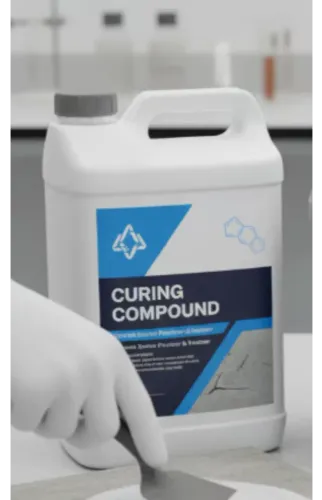

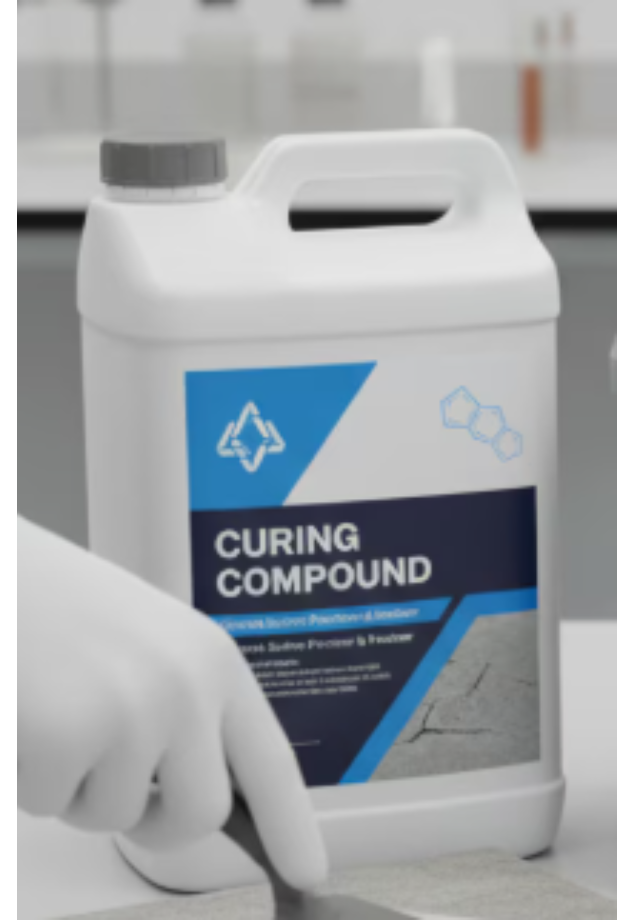
Proper curing is one of the most important steps in concrete construction, yet it is often overlooked. Inadequate curing can reduce concrete strength, increase cracking, and shorten the lifespan of a structure. While traditional water curing has been widely used for decades, a Curing Compound offers an effective alternative in many construction environments.
For projects in Mumbai, where water availability, labour efficiency, and construction schedules are critical considerations, curing compounds are becoming increasingly common across residential, industrial, and infrastructure developments.
Why Concrete Curing Is Essential
Fresh concrete requires adequate moisture during the early stages of hydration.
Without proper curing, concrete may experience:
- Surface cracking
- Plastic shrinkage
- Reduced strength
- Increased permeability
- Poor abrasion resistance
- Lower durability
Good curing practices help concrete achieve its intended performance.
How a Curing Compound Works
A curing compound forms a thin protective membrane on the concrete surface. This membrane slows moisture evaporation, allowing cement hydration to continue for a longer period.
Unlike conventional water curing, it reduces the need for continuous watering while maintaining curing efficiency under suitable conditions.
Situations Where Curing Compounds Perform Well
They are particularly useful for:
- Large floor slabs
- Highways
- Industrial flooring
- Bridge decks
- Airport pavements
- Parking structures
- Large commercial projects
These projects often make continuous water curing difficult or expensive.
Advantages Over Conventional Methods
A curing compound offers several practical benefits.
Reduced Water Consumption
Less dependence on continuous water supply supports sustainable construction.
Labour Savings
Fewer workers are required for ongoing curing operations.
Uniform Surface Protection
The membrane helps minimise uneven drying.
Improved Construction Efficiency
Application is generally faster than prolonged water curing.
Better Project Scheduling
Reduced curing management helps improve overall site productivity.
Points to Consider Before Choosing
Not every curing method suits every project.
Evaluate:
- Surface finish requirements
- Future coatings
- Environmental exposure
- Project specifications
- Concrete type
- Weather conditions
The curing method should always comply with engineering and project requirements.
Construction Challenges in Mumbai
High temperatures, strong sunlight, and varying humidity can accelerate moisture loss from fresh concrete.
For this reason, many contractors choose curing solutions that simplify site management while helping maintain concrete quality. Manufacturers such as Wizplast Chemicals Pvt. Ltd. supply curing compounds designed to support demanding construction environments across Maharashtra.
Better Curing Supports Better Structures
A well-selected Curing Compound is more than a convenience—it contributes directly to concrete strength, durability, and long-term performance. Evaluating curing methods early in project planning helps ensure that concrete delivers the expected structural quality throughout its service life.