

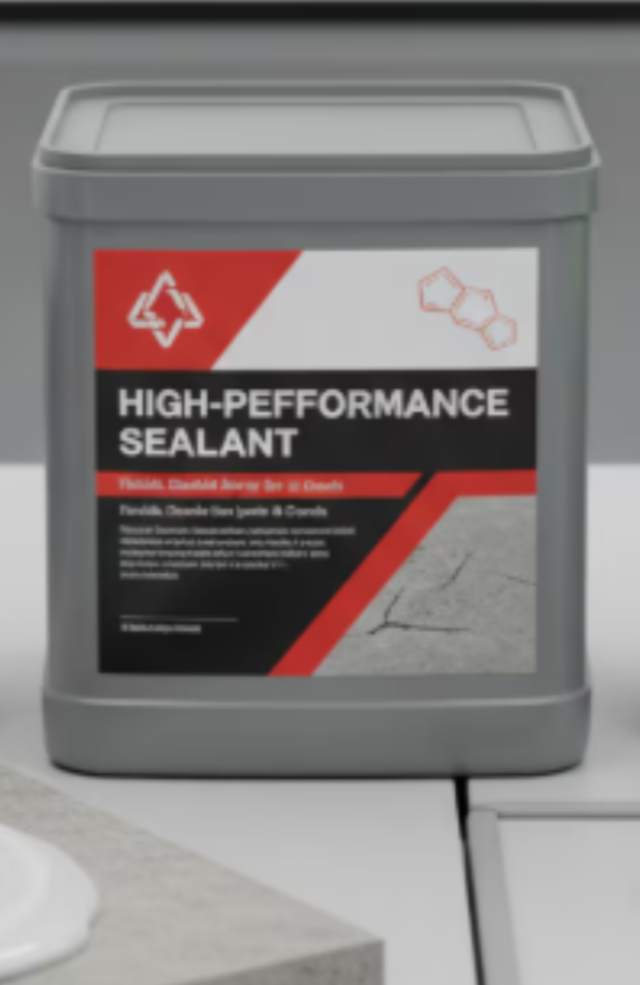
Buildings and infrastructure contain numerous joints, gaps, and interfaces where different materials meet. These locations must accommodate movement while limiting unwanted entry of water, air, dust, and contaminants. A suitable construction Sealant helps create a flexible barrier within these vulnerable areas.
Selecting the right sealant begins with understanding the joint rather than choosing a product based only on general descriptions.
Why Construction Joints Need Flexibility
Concrete, masonry, metal, glass, and other construction materials do not remain completely static. They expand and contract due to temperature changes, moisture conditions, structural movement, and loading.
A rigid filler placed in a moving joint may crack or separate. Sealants are formulated to accommodate a defined level of movement while maintaining adhesion to the joint surfaces.
Common applications include:
- Expansion joints
- Façade joints
- Concrete joints
- Window perimeters
- Door frames
- Precast panel joints
- Roof interfaces
- Service penetrations
- Certain flooring joints
Each application places different demands on the material.
Joint Design Has a Major Impact
Even a high-quality construction Sealant can perform poorly when the joint itself has not been prepared correctly.
Joint width and depth should suit the expected movement and the sealant manufacturer's recommendations. Backer rods may be used to help control sealant depth and establish the desired joint profile.
Surface preparation is equally important. Dust, laitance, oil, loose material, moisture, and previous coatings can interfere with adhesion.
Before application, teams should assess substrate condition and determine whether a primer is required.
Movement Capability Needs Attention
One of the most important technical considerations is how much movement the joint is expected to experience.
For example, façade joints exposed to daily temperature changes may experience repeated expansion and contraction. Industrial structures can face vibration and operational movement. Exterior joints also have to deal with rain, sunlight, and environmental exposure.
The selected product should therefore match:
- Expected joint movement
- Substrate type
- Interior or exterior exposure
- Water exposure
- Temperature range
- UV conditions
- Required curing characteristics
- Subsequent coating requirements
Selecting purely by price can overlook these factors.
Weather Conditions Affect Application
Construction projects in Navi Mumbai and coastal Maharashtra can encounter humidity, heavy monsoon rainfall, and substantial seasonal temperature changes. Exterior joint sealing therefore needs careful planning around surface moisture and application conditions.
Applying sealant to unsuitable wet surfaces or immediately before heavy rain can affect certain products. Technical data should guide application timing.
Treat Sealant Selection as an Engineering Decision
Joint sealing is a relatively small part of overall construction expenditure, yet failed joints can create disproportionately disruptive maintenance issues.
Wizplast Chemicals Pvt. Ltd. operates in the construction chemicals segment, where selection needs to consider substrate compatibility and actual project exposure. Engineers and contractors can improve outcomes by evaluating technical data and conducting application trials where necessary.
A construction Sealant performs best when product properties, joint dimensions, substrate preparation, and application practices are considered together. Effective joint sealing is not simply about filling a visible gap. It is about maintaining a durable, flexible interface capable of responding to the conditions the structure will face.