


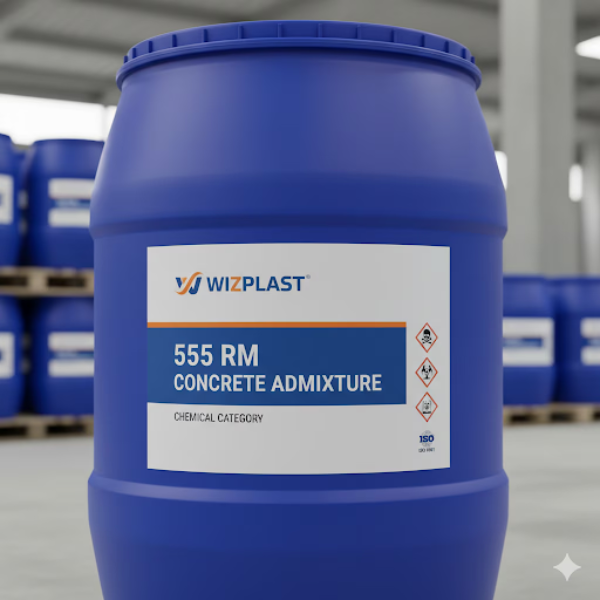
Concrete performance depends on much more than cement, aggregates, and water. The way fresh concrete behaves during mixing, transportation, placement, compaction, and curing can directly affect the quality of the finished structure. This is where a concrete admixture becomes an important part of modern mix design.
For builders, contractors, civil engineers, and ready-mix concrete manufacturers working in Navi Mumbai and across Maharashtra, admixtures can help achieve specific performance requirements without unnecessarily changing the basic proportions of a concrete mix.
What Does a Concrete Admixture Do
A concrete admixture is added during the mixing process to modify certain properties of fresh or hardened concrete. Depending on the formulation and dosage, it may help improve workability, manage setting characteristics, reduce water demand, increase early or long-term strength, and support easier placement.
This becomes particularly useful when concrete must be pumped over distances, placed in congested reinforcement, handled during demanding weather conditions, or produced to meet specific project requirements.
The main benefits may include:
- Better concrete flow and workability
- Reduced water requirement
- Improved consistency during placement
- Better compaction around reinforcement
- Controlled setting characteristics
- Improved strength potential through lower water-cement ratios
- More efficient concrete production
The actual result depends on cement chemistry, aggregate properties, mix proportions, dosage, temperature, and site conditions.
Why Water Reduction Matters
Adding extra water is one of the simplest ways to make concrete easier to place, but excessive water can negatively affect strength, permeability, shrinkage, and long-term durability.
A suitable concrete admixture can improve workability while limiting the need for additional mixing water. This allows engineers to develop mixes that remain practical to handle while maintaining the required water-cement ratio.
For ready-mix concrete operations, this can also help maintain more predictable production when concrete has to travel from the batching plant to different construction locations.
Different Projects Need Different Performance
There is no universal admixture suitable for every application. Residential towers, industrial floors, infrastructure structures, precast components, foundations, and commercial developments may have very different concrete requirements.
Before choosing a product, technical teams should assess factors such as:
- Required concrete grade
- Target slump
- Slump retention period
- Placement method
- Ambient temperature
- Cement and supplementary cementitious materials
- Pumping distance
- Required setting time
- Strength development targets
Trial mixes are particularly valuable because admixture performance can change when the cement source, aggregate grading, water content, or other mix components change.
Better Concrete Begins With Mix Compatibility
Construction professionals should avoid selecting admixtures solely on the basis of dosage or price per kilogram. A product that performs effectively at an optimized dosage may provide better overall value than a cheaper product requiring significantly higher consumption.
Compatibility testing also helps identify potential concerns such as excessive retardation, rapid slump loss, segregation, or inconsistent setting.
Manufacturers such as Wizplast Chemicals Pvt. Ltd. serve construction and concrete industry requirements where product selection needs to align with practical project conditions. For projects in Navi Mumbai and other parts of Maharashtra, evaluating technical suitability before full-scale use can help improve consistency from batching through placement.
Ultimately, a concrete admixture should be treated as part of concrete engineering rather than simply another construction material. Correct selection, controlled dosing, trial validation, and good site practices work together to achieve dependable concrete performance.